
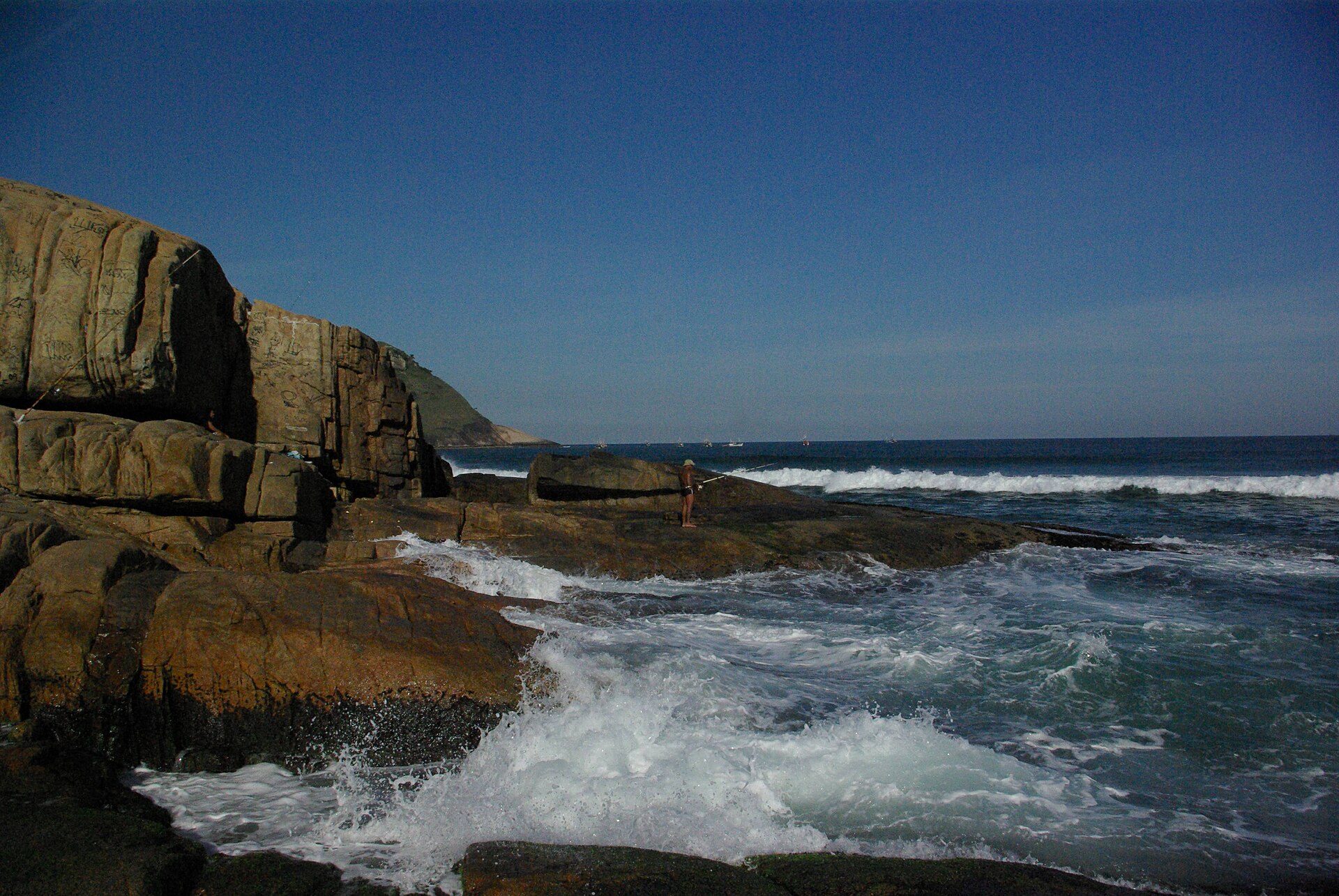
You can surf in Rio de Janeiro almost every day of the year. The city has more than 40 km of ocean-facing beaches, from Arpoador in the south zone to Grumari in the west, with waves for beginners, longboarders and experienced surfers. The most consistent conditions run from April to September, when south and southeast swells arrive with more power, while summer brings smaller surf and warm water — ideal for learning.
What the waves are like
Almost every beach in Rio is a sand-bottom beach break. The peaks shift through the year as the banks move, so the same beach can be perfect one month and disorganised the next. The upside is variety: within a few kilometres you can find anything from gentle whitewater to demanding walls.
The west zone, where Praia da Macumba sits, picks up virtually every swell direction that reaches Rio, which makes it the most consistent part of the city. The south zone depends more on south and southeast swells.
Best time of year
- Autumn and winter (April to September): the most consistent swells and clean early mornings, with cooler water. Many surfers wear a thermal top or spring suit.
- Spring (October and November): a transition season with good windows and fewer people in the water.
- Summer (December to March): smaller surf, warm water and long days — the best time for surf lessons, longboarding and stand up paddle.
Where to surf in Rio
The best-known spots are Arpoador, Leblon, Barra da Tijuca, Recreio, Macumba, Prainha and Grumari. We break each one down in our guide to the best surf beaches in Rio.
For consistency and space in the water, the west zone is the natural choice. Praia da Macumba, between Recreio and Prainha, works on both small and large swells, has excellent longboard walls and sits minutes from Prainha and Grumari.
Surf lessons: how to start
If it is your first time, pick a beach with organised whitewater and less current — Macumba, Recreio and Barra are the ones most used by surf schools. A lesson usually means about an hour in the water, after a warm-up and safety briefing on the sand.
At Longboard Paradise, surf lessons start at R$140, with board, rash guard and leash included, taught by instructors who surf Macumba every day.
What to bring
- Water-resistant, ideally reef-safe sunscreen
- A thermal top or spring suit in winter; a rash guard in summer
- Wax for tropical water most of the year
- Water and something to eat after the session
Line-up etiquette
Rio's peaks get crowded. Respect priority, never let go of your board, keep clear of swimmers and watch the currents on bigger days. Where there are lifeguards, paddle out near their posts.
Where to stay
Staying near the water changes the trip: you wake up, look at the ocean and decide. See where to stay for surfing in Rio. Longboard Paradise has two units at Praia da Macumba — the Surf Club, with a surf-house feel, and the Suites, more private — plus board storage, a restaurant and an ocean-view rooftop.